What is the Johari Window?
The Johari Window is named after its inventors, given their first names, Joseph Luft and Harry Ingham. It is used to help people better understand their interpersonal communication and relationships. It is a matrix created in the 1950's with four quadrants that visualize the self based known or unknown to self and others. The four selves include the "open", "blind", "hidden", and "unknown". According to an academic journal entry from Technical communications, author Charles E. Beck stated "The range of human cognitive processes gives some indication of the breadth and creativity at the center of the communication process. When we add to this range the transactional nature of communication--the fact that multiple people have similar inner experiences and interpretations--we can understand how people have different impressions of the same event, as well as different sets of interpretations and assumptions. A model that captures these parallel perceptions, the Johari Window,enables us to gain a perspective on the individual within the communication process".
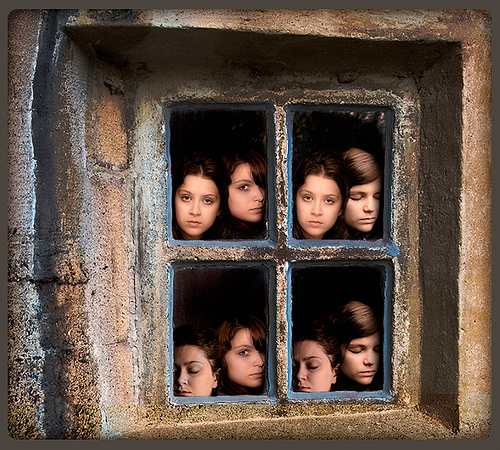 |  |
The lines dividing the four quadrants are like window shades that can be moved as interaction progresses.
